
Five out of the top 10 companies in Fortune 500 list of Indian companies are from the oil sector.

Oil marketing company Bharat Petroleum Corporation Ltd, on Monday announced a mega foray into oil exploration and production business and has earmarked a budget of Rs 1,000-1,500 crore (Rs 10-15 billion).
Indian Oil Corp is unlikely to bid for a share in six new pipelines being built by Reliance Industries to transport fuel from its refinery to its planned chain of petrol stations.\n\n\n\n
The government is likely to finalise by the third week of this month, the advisor for divestments of Bharat Petroleum Corporation Ltd for which over half a dozen merchant bankers are in the race.\n\n\n\n
Punjab Police beat Namdhari XI 3-2, while Bharat Petroleum edged out Air India 1-0 in the Nehru Hockey tournament.
State-owned Bharat Petroleum Corporation Ltd will commission the Rs 6,354 crore (Rs 63.54 billion) Bina refinery in Madhya Pradesh in two years' time.\n\n\n\n
Gagan Ajit Singh scored three minutes before the final whistle in a Super League match of the Nehru hockey tournament.
Kicking-off the process of divestment in Bharat Petroleum Corp, government has invited bids for appointment of a global advisor for sale of 35.2 per cent stake in the oil PSU through public offer.
Bharat Petroleum Corporation Limited will invest Rs 7,500 crore in the next five years to modernise and expand its operations. \n\n
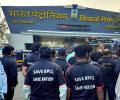
Oil Minister Hardeep Singh Puri on Thursday indicated that the much-delayed privatisation of oil major BPCL may not happen in the near future, saying there is "no proposal whatsoever" on his table for now. As part of its asset monetisation plan, the government had in November 2019 put Bharat Petroleum Corporation (BPCL) on the block and said it would completely sell its 52.98 per cent stake in the country's second largest state-run oil refiner and marketer. Though it had received three tentative bids, it got only one financial bid from Vedanta group, forcing it in May 2022 to shelve the plan pending a "comprehensive review".

Automaker MG Motor India on Monday said it has partnered with Bharat Petroleum Corporation Ltd (BPCL) to bolster EV charging infrastructure across the country. The partnership with BPCL will add momentum to EV adoption by expanding opportunities for intercity travel as the two entities will install EV chargers across highways and within cities, the automaker said in a statement. With BPCL's vast customer reach and operations and MG's strides in the EV space, the two entities can combine expertise to strategically identify charging sites, garner consumer insights, devise loyalty programs, and create technology to manage charging systems, it added.
Indian Airlines thumped Tamil Nadu 6-1 while the policemen beat Bharat Petroleum 2-0 in the Nehru hockey semi-finals.
Both made the last four of the Nehru hockey tournament with golden goals.
The State-run Oil India Ltd will raise its stake in Numaligarh Refinery Ltd to 26 per cent to strengthen its position as an integrated oil company.
Asian Development Bank and ExxonMobil-promoted RasGas of Qatar have taken 10 per cent equity each in Petronet LNG Ltd, the public sector joint venture firm which will begin importing liquefied natural gas from January next year.
The government is believed to have zeroed in on DSP Merill Lynch for appointment as advisor and UBS and I-Sec as lead manager for the proposed public offer in Bharat Petroleum Corporation.
Oil and Natural Gas Corp, said on Monday it had signed an agreement to supply crude oil to refiner Bharat Petroleum Corp Ltd for two years ending March 2004.\n\n\n\n

As many as 20 central public sector enterprises and their units are at various stages of strategic disinvestment, while six are being considered for closure or are under litigation, Minister of State for Finance Anurag Singh Thakur said on Monday.
State-run Bharat Petroleum Corporation Ltd on Monday said it is losing Rs 3 per litre on sale of diesel and Rs 2 per litre on petrol

India is back on the diplomatic table pushing oil producing countries to raise production in a bid to cool down runaway oil prices. Brent crude oil prices traded above $90 a barrel, on Thursday, for the first time since 2014. Brent is the most popular marker for crude oil trade. It is used as a benchmark for two-thirds of the world's internationally traded crude oil.
Oil PSUs to pay Rs 2,500 cr interim dividend.

Government-owned companies are more generous in rewarding their shareholders with dividends.
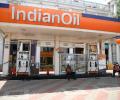
Petrol price on Tuesday was increased by 15 paise per litre and diesel by 18 paise as State-owned fuel retailers started passing on the increase in international oil prices to consumers after an 18-day hiatus.
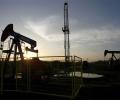
There are about 23 oil refineries in India with a combined capacity of 230 million tonnes per annum.
If IOC is not allowed to run its own affairs, then we can see it close down in the next 10 to 15 years, warns Sudhir Bisht.

The brokerage said it expected corporate earnings to turn around.
Privatisation of BPCL, which was dubbed India's biggest ever, has been stalled with just one bidder left in the fray after two others walked out over issues such as lack of clarity in fuel pricing, a top source said. The government had planned to sell its entire 52.98 per cent stake in Bharat Petroleum Corporation Ltd (BPCL) and invited Expression of Interest from bidders in March 2020. At least three bids came in by November 2020 but only one remains now after the others withdrew from the race.

It was touted as a game changer but big-ticket privatisation has been a mixed bag as the government faces unanticipated challenges of lukewarm investor response, employee union agitation and legal hurdles. Prime Minister Narendra Modi's often-repeated statement 'the government has no business to be in business' guided the drawing up of an ambitious privatisation pipeline. While Air India sale succeeded, Bharat Petroleum Corporation Ltd (BPCL) divestment failed.
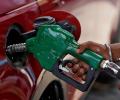
The price of petrol was hiked to Rs 101.39 a litre in Delhi from Rs 101.19 and to Rs 107.47 per litre in Mumbai, according to a price notification of state-owned fuel retailers. Diesel rates went to Rs 89.57 a litre in Delhi and Rs 97.21 in Mumbai.
International oil prices have hit a six-month low, helping Indian fuel retailers breakeven on petrol but they continue to lose money on diesel - the most used fuel in the country, officials said. The world's best-known crude benchmark, Brent was trading at $94.91 per barrel on Thursday after concerns of a global recession led to it slipping to a six-month low of $91.51 on the previous day. The current rates are a relief to India, which is 85 per cent dependent on imports for meeting its oil needs.
Petrol price cut by 50 paisa a litre; diesel by 46 paisa.
Petrol price in the national capital neared the Rs 85 a litre mark while diesel rates in Mumbai were close to Rs 82 as fuel prices were raised by 25 paise per litre each on Monday. Petrol now costs a lifetime high of Rs 84.95 per litre in Delhi while diesel comes for Rs 75.13, according to a price notification from oil marketing companies. The price hike on Monday came after three days of unchanged rates. Prices were last hiked by 50 paise a litre in two instalments on January 13 and 14.
